
Retail Display Racks Factory Checklist for Store Layout and Load Needs
Time
Click Count
Choosing a retail display racks factory is rarely just a sourcing task. It shapes store circulation, product visibility, structural safety, installation timing, and the consistency of a brand environment across locations. For projects that must balance load needs with layout efficiency, the right factory becomes part of the planning system, not only a production vendor.
That matters even more in today’s commercial environment, where physical retail is expected to work alongside digital tools, sustainable materials, and tighter supply chain coordination. In the broader view promoted by G-BCE, fixtures are not isolated hardware. They connect commercial furniture standards, smart retail infrastructure, logistics discipline, and the customer experience built inside a modern store.
Why factory selection affects more than shelf capacity
A retail display racks factory influences how a space performs from the earliest drawing stage. Rack dimensions determine aisle width, endcap rhythm, sight lines, and the flexibility to refresh merchandising later.
The same factory also affects structural confidence. If material gauge, welding quality, connector tolerance, or anchoring details are inconsistent, the problem appears on site, not on paper.
The image below relates to fixture planning and load coordination.
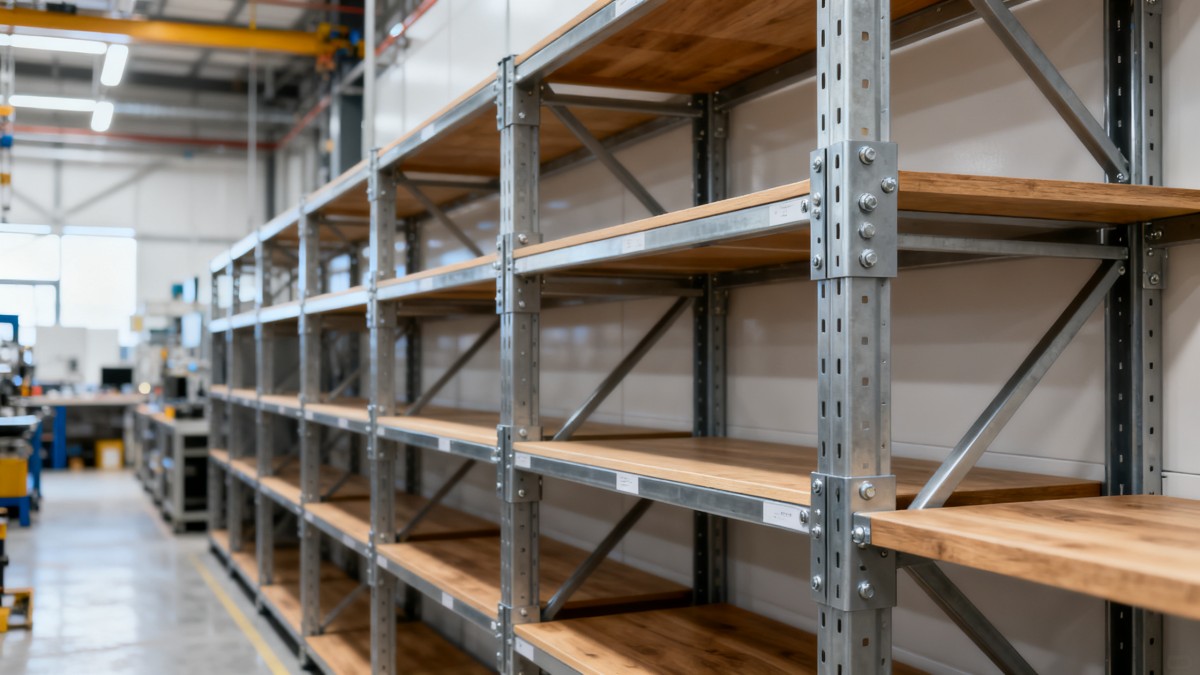
In practice, a good retail display racks factory should support three goals at once: operational flow, safe product loading, and repeatable visual standards across single stores or multi-site rollouts.
What the checklist should really measure
A useful checklist does not stop at unit price. It should reveal whether the factory can translate a commercial concept into reliable hardware under real project conditions.
- Can the factory match layout drawings with engineering details?
- Does it provide verified load data for each rack configuration?
- Are finishes, dimensions, and accessories consistent across batches?
- Can packaging and delivery support phased installations?
- Is there evidence of compliance with relevant standards such as UL, CE, or BIFMA where applicable?
Core technical points behind layout and load needs
Store layout and rack load requirements are closely connected. A narrow aisle may increase display density, but it can also limit fixture depth, reduce refill access, and complicate safe loading.
A capable retail display racks factory should understand this relationship before quoting. When fixture selection is treated as a simple catalog exercise, later revisions often increase cost and delay installation.
Material and structure
Steel thickness, tube profile, board density, and surface treatment all affect performance. Heavy merchandise, high customer interaction, and frequent replenishment demand stronger structures than decorative displays.
Load values should be specific. A factory should distinguish between total unit load, shelf load, dynamic loading, and wall-mounted versus freestanding conditions.
Tolerance and modularity
Layout plans depend on repeatable dimensions. Small deviations in upright spacing or shelf brackets create alignment problems across entire rows.
Modular systems are often preferred because they simplify store updates. Even so, modularity only works when the retail display racks factory controls hole patterns, connector standards, and accessory compatibility.
Finish quality and environment
Powder coating, laminates, edge treatment, and anti-corrosion performance matter more than appearance alone. Grocery, cosmetics, electronics, and lifestyle stores create different wear patterns and cleaning demands.
How current retail trends change the checklist
The checklist for a retail display racks factory is changing because stores now carry more than physical products. They also carry technology, sustainability targets, and pressure for rapid reconfiguration.
Within the G-BCE perspective, fixture decisions increasingly intersect with lighting, signage, smart POS hardware, and packaging presentation. A rack may need cable routes, digital label support, or precise lighting integration.
Sustainability is another shift. Material origin, recyclability, efficient packaging, and finish durability can affect both procurement policy and total operating cost. A low initial price may hide high replacement frequency.
Signals worth checking early
- Experience with rollouts across multiple regions or store formats
- Ability to integrate signage, lighting, or smart retail accessories
- Documentation for standards, testing, and material traceability
- Packaging plans that reduce damage and simplify site handling
- Engineering support for revisions after prototype review
Common project scenarios and what they require
Not every retail environment asks the same thing from a retail display racks factory. The right checklist should reflect the actual use case.
High-density supermarkets and convenience formats
These projects need strong load performance, rapid replenishment access, and excellent batch consistency. Impact resistance and simple replacement parts are often more valuable than decorative complexity.
Fashion, beauty, and premium lifestyle stores
Visual finish becomes more critical here, but structure still matters. Mixed materials, hidden fasteners, integrated lighting, and tighter tolerances are common requirements.
Electronics and experience-led retail
Fixtures may need cable management, accessory locking, demo zones, and compatibility with digital interfaces. The retail display racks factory should coordinate with equipment suppliers early.
Temporary campaigns and seasonal conversions
Fast assembly, compact packaging, and reusable components become priority factors. In these cases, installation speed can be just as important as static load rating.
A practical checklist before approval
A short factory visit or remote audit can reveal more than a polished quotation. The goal is to confirm whether the retail display racks factory can execute your exact fixture logic at scale.
- Review prototype samples under realistic loading conditions, not only visual inspection.
- Check workshop capability for metalwork, woodwork, finishing, and final assembly.
- Ask for quality control checkpoints from raw material intake to packing.
- Confirm drawing management, revision control, and approval records.
- Verify lead times for samples, mass production, and replenishment orders.
- Match shipping method and packaging design to site access conditions.
It is also useful to compare the factory’s language of response. Strong suppliers answer with tolerances, load values, finish methods, test references, and packaging logic. Weak suppliers stay at the level of generic promises.
Turning comparison into a better decision framework
The best decision is rarely the cheapest rack or the most elaborate prototype. It is the option that aligns fixture engineering with merchandising strategy, installation constraints, and future store updates.
Using a retail display racks factory checklist well means translating commercial goals into measurable criteria. Layout efficiency should be documented. Load assumptions should be tested. Finish quality should be benchmarked. Delivery should fit the rollout plan.
That approach reflects the wider G-BCE mindset: reliable commercial environments are built when fixtures, technology, standards, and supply chain decisions are evaluated together rather than in isolation.
The next step is practical. Define store zones, expected product loads, fixture types, finish priorities, and installation sequencing before comparing factories. With those inputs in place, a retail display racks factory can be assessed on evidence, not assumption, and the final layout is far more likely to perform as intended.
News Recommendations
 How do packaging customization options affect minimum order quantities in Europe?
![51a6ab95581761cc26f4318be6520c15]()
Aris Katos
Future of Carbide Coatings
 Transom to Acquire Cree LED in Commercial Lighting Ownership Change
![51a6ab95581761cc26f4318be6520c15]()
Aris Katos
Future of Carbide Coatings
 How to plan customer flow in commercial design planning
![51a6ab95581761cc26f4318be6520c15]()
Aris Katos
Future of Carbide Coatings
 USTR Urged to Permanently Suspend Fees on China-Linked Ships
![51a6ab95581761cc26f4318be6520c15]()
Aris Katos
Future of Carbide Coatings
 How to choose comparable stores for retail benchmarking
![51a6ab95581761cc26f4318be6520c15]()
Aris Katos
Future of Carbide Coatings
 How does anchoring affect modular building wind load resistance?
![51a6ab95581761cc26f4318be6520c15]()
Aris Katos
Future of Carbide Coatings
 Amazon Raises European FBA Surcharge to 2% in Ten Markets From November 2
![51a6ab95581761cc26f4318be6520c15]()
Aris Katos
Future of Carbide Coatings
 How to verify a BPA-free test report for baby products
![51a6ab95581761cc26f4318be6520c15]()
Aris Katos
Future of Carbide Coatings
 China's Mandatory Classroom Lighting Standard GB 7793-2025 Takes Effect November 1
![51a6ab95581761cc26f4318be6520c15]()
Aris Katos
Future of Carbide Coatings
 How order volume affects the price of wholesale poly mailers
![51a6ab95581761cc26f4318be6520c15]()
Aris Katos
Future of Carbide Coatings
 US Imposes 50% Tariff on Certain Canadian PET Resin Imports
![51a6ab95581761cc26f4318be6520c15]()
Aris Katos
Future of Carbide Coatings
 How to read the maximum ratings in a semiconductor datasheet
![51a6ab95581761cc26f4318be6520c15]()
Aris Katos
Future of Carbide Coatings
 University of Maryland Develops Bio-Based Packaging to Extend Avocado and Cucumber Shelf Life
![51a6ab95581761cc26f4318be6520c15]()
Aris Katos
Future of Carbide Coatings
 How to verify a cookware manufacturer's induction compatibility claims
![51a6ab95581761cc26f4318be6520c15]()
Aris Katos
Future of Carbide Coatings
 Omdia Forecasts 11.6% Annual Growth in LED Display Revenue Through 2030
![51a6ab95581761cc26f4318be6520c15]()
Aris Katos
Future of Carbide Coatings
 How to verify a pulp molding packaging factory's production capacity
![51a6ab95581761cc26f4318be6520c15]()
Aris Katos
Future of Carbide Coatings
 Curion Survey: Half of Consumers Frustrated by Sustainable Packaging
![51a6ab95581761cc26f4318be6520c15]()
Aris Katos
Future of Carbide Coatings
 How to assess the credibility of market insight content
![51a6ab95581761cc26f4318be6520c15]()
Aris Katos
Future of Carbide Coatings
 US Removes 50% Additional Tariff on Selected Canadian Packaging Products
![51a6ab95581761cc26f4318be6520c15]()
Aris Katos
Future of Carbide Coatings
 Will a waterproof dimmable LED driver work with your existing dimmer?
![51a6ab95581761cc26f4318be6520c15]()
Aris Katos
Future of Carbide Coatings
 Charter Next Generation Raises Film PCR Use 30%, Advances Food-Grade Applications
![51a6ab95581761cc26f4318be6520c15]()
Aris Katos
Future of Carbide Coatings
 How to choose a dog harness and leash for a dog that pulls hard
![51a6ab95581761cc26f4318be6520c15]()
Aris Katos
Future of Carbide Coatings
 How to respect local customs when negotiating with overseas suppliers
![51a6ab95581761cc26f4318be6520c15]()
Aris Katos
Future of Carbide Coatings
 RFID Recycling Challenges Bring Paper-Based and Chipless Tags Into Focus
![51a6ab95581761cc26f4318be6520c15]()
Aris Katos
Future of Carbide Coatings
 How to choose commercial lighting for offices that reduces glare
![51a6ab95581761cc26f4318be6520c15]()
Aris Katos
Future of Carbide Coatings
 Queue Launches Fully Automated Robotic Pharmacy Kiosk for 30-Second Dispensing
![51a6ab95581761cc26f4318be6520c15]()
Aris Katos
Future of Carbide Coatings
 Can your supermarket store fixtures supplier meet your opening date?
![51a6ab95581761cc26f4318be6520c15]()
Aris Katos
Future of Carbide Coatings
 Shopify POS UI Extensions 2026-10 Adds Virtual Lists and Custom Row Templates
![51a6ab95581761cc26f4318be6520c15]()
Aris Katos
Future of Carbide Coatings
 How to assess smart office furniture suppliers’ North American support
![51a6ab95581761cc26f4318be6520c15]()
Aris Katos
Future of Carbide Coatings
 Aqara Launches Smart Lighting Range to Advance AI Spatial Intelligence
![51a6ab95581761cc26f4318be6520c15]()
Aris Katos
Future of Carbide Coatings
 How to assess demand forecasts in a lighting intelligence report
![51a6ab95581761cc26f4318be6520c15]()
Aris Katos
Future of Carbide Coatings
 Billerud推出PharmaKraft纤维基医药包装材料
![51a6ab95581761cc26f4318be6520c15]()
Aris Katos
Future of Carbide Coatings
 How to assess supplier reliability in global supply chain sourcing
![51a6ab95581761cc26f4318be6520c15]()
Aris Katos
Future of Carbide Coatings
 Omdia Forecasts 11.6% CAGR for Global LED Video Display Market in 2026–2030
![51a6ab95581761cc26f4318be6520c15]()
Aris Katos
Future of Carbide Coatings
 How to verify an LFGB testing laboratory's accreditation scope
![51a6ab95581761cc26f4318be6520c15]()
Aris Katos
Future of Carbide Coatings
 How to assess a workplace interior supplier's installation scope
![51a6ab95581761cc26f4318be6520c15]()
Aris Katos
Future of Carbide Coatings
 What records are needed for an ISO 9001 furniture factory audit?
![51a6ab95581761cc26f4318be6520c15]()
Aris Katos
Future of Carbide Coatings
 How to choose AI marketing tools that work with your existing CRM
![51a6ab95581761cc26f4318be6520c15]()
Aris Katos
Future of Carbide Coatings
 Do freight costs erase savings when buying retail fixtures wholesale?
![51a6ab95581761cc26f4318be6520c15]()
Aris Katos
Future of Carbide Coatings







































