
Does Retail Lighting Really Change Buying Behavior?
Time
Click Count
Retail environments are no longer shaped by aesthetics alone. From retail lighting psychological impact to human centric lighting (HCL) and biophilic lighting design, lighting choices now influence attention, comfort, and conversion. This article explores whether smarter illumination—alongside energy efficient signage trends and performance standards—can genuinely change buying behavior for operators, specifiers, and sourcing professionals.
Why does retail lighting influence buying behavior in the first place?
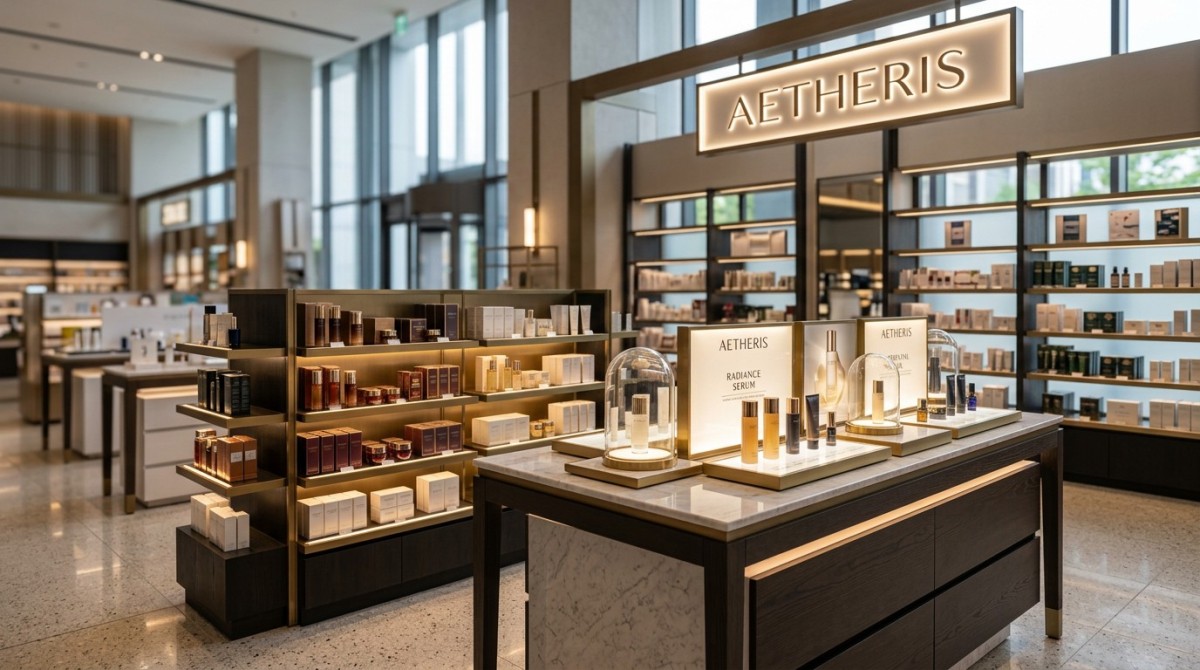
Retail lighting changes buying behavior because shoppers do not respond only to products; they respond to visual hierarchy, comfort, perceived quality, and ease of decision-making. In physical stores, lighting guides the eye within the first few seconds of entry, often shaping where customers walk, what they touch, and how long they stay. For information researchers and commercial evaluators, this matters because lighting is not decoration alone. It is part of the selling system.
In practical terms, retail lighting psychological impact shows up through contrast, color rendering, glare control, and timing. A bright focal beam on a hero display can increase product noticeability, while a softer ambient layer can reduce visual fatigue during a 15–40 minute store visit. Operators often observe that poor lighting does not always trigger complaints, but it does weaken browsing confidence, slow product recognition, and reduce the perceived premium level of merchandise.
This is also why human centric lighting and biophilic lighting design are gaining attention beyond wellness-driven spaces. Retailers want environments that feel intuitive, calm, and brand-aligned. In categories such as cosmetics, fashion, electronics, and home goods, shoppers compare details closely. If lighting distorts color, creates harsh shadows, or washes out packaging, the store may quietly lose sales without any obvious operational failure.
For sourcing teams, the challenge is clear: the buying effect of lighting is real, but it depends on the right specification mix. Color temperature, CRI, beam angle, controls integration, and signage coordination need to be matched to store format, dwell time, and merchandise type. A chain operator rolling out 20–200 sites cannot rely on generic fixtures alone. That is where benchmarking platforms such as G-BCE become useful, especially when comparing Asian manufacturing capability with global commercial performance expectations.
What buying signals does lighting actually affect?
Lighting rarely forces a purchase directly, but it influences several commercial signals that sit immediately before conversion. These signals are measurable in store planning, fixture layout, and operational reviews.
- Attention capture within the first 3–8 seconds after store entry, especially around windows, decompression zones, and promotional tables.
- Product evaluation quality during close inspection, where CRI, glare, and vertical illumination affect texture, finish, and packaging readability.
- Dwell time across 10–30 minute browsing cycles, particularly in categories where comparison shopping is common.
- Perceived value and brand trust, because consistent, well-layered illumination often makes products look more precise, cleaner, and more premium.
For procurement personnel, these signals are more actionable than vague claims about “better experience.” They can be translated into fixture counts, control zones, maintenance schedules, and merchandising outcomes.
Which lighting strategies work best in different retail scenarios?
Not every store needs the same retail lighting strategy. A convenience format with rapid turnover needs speed, visibility, and energy discipline. A luxury showroom needs texture, depth, and low-glare precision. A supermarket needs broad uniformity, refrigerated area compatibility, and consistent wayfinding. Buyers and operators should therefore avoid one-spec-fits-all planning and instead evaluate 3 core layers: ambient lighting, accent lighting, and signage illumination.
Human centric lighting becomes more relevant in spaces where customers spend 20 minutes or more, such as home furnishing, lifestyle retail, bookstores, and premium beauty. In those formats, moderate shifts in intensity and color tone across the day can help reduce fatigue for both shoppers and staff. Biophilic lighting design often performs well in stores that want to create calm, material-rich environments, especially when combined with wood, stone, or sustainable packaging displays.
At the same time, energy efficient signage trends should not be treated separately from interior lighting. External signs, shelf-edge illumination, digital menu boards, and branded lightboxes all compete for attention. When signage brightness is too aggressive relative to the store interior, visual comfort drops. When it is too weak, promotional messaging disappears. Good retail lighting planning balances focal intensity with readable contrast, usually across multiple zones rather than one uniform output level.
The table below helps decision-makers compare common scenarios. It is not a fixed formula, but it provides a realistic framework for operators, sourcing teams, and evaluators reviewing lighting concepts across commercial formats.
The main takeaway is that retail lighting should be specified by mission, not by fixture catalog alone. G-BCE supports this process by connecting application scenarios with technical benchmarking, allowing buyers to compare lighting and signage decisions against operational demands, international standards, and supply chain realities.
Scenario planning checklist for sourcing teams
Before approving a store package, it helps to test whether the lighting concept matches the commercial task. A 4-point checklist can reduce redesign risk during rollout.
- Map store zones by shopper behavior: entry, browse, compare, queue, and checkout.
- Define the main product surfaces that require accurate rendering, such as textiles, cosmetics, food, or packaging graphics.
- Assess operating hours and maintenance access, especially for chains open 12–18 hours per day.
- Check whether signage brightness and interior lighting levels support one coherent visual hierarchy.
This scenario-first method is often more useful than choosing luminaires only by upfront price or catalog appearance.
What should buyers compare when selecting retail lighting systems?
Procurement teams often face a familiar problem: two lighting proposals may look similar on paper, but one performs better in merchandising, maintenance, and lifecycle cost. To make better decisions, buyers should compare not just luminaire price, but at least 5 dimensions: visual performance, controllability, compatibility with signage, installation complexity, and compliance readiness. This is especially important for cross-border projects where commercial expectations and product sourcing bases are not in the same region.
Retail lighting psychological impact depends heavily on technical details that are easy to overlook. For example, a fixture with acceptable lumen output may still produce poor shelf visibility if the beam distribution is wrong. Likewise, an attractive decorative lamp may undermine product sales if glare hits eye level at the wrong angle. Buyers should therefore ask suppliers to provide photometric logic, application notes, and realistic deployment recommendations rather than simple wattage comparisons.
Because many operators now integrate smart retail technology, lighting should also be evaluated as part of a broader system. Dimming controls, occupancy logic, daylight response, and digital signage synchronization can affect energy use and customer comfort over 2–5 year operating periods. G-BCE’s benchmarking value is that it helps sourcing directors compare commercial hardware in context, rather than evaluating lighting in isolation from fixtures, signage, and store technology.
The comparison table below outlines practical evaluation points for decision-makers who need a sourcing framework that supports both user experience and operational discipline.
A useful sourcing rule is to compare proposals over 3 stages: pre-spec review, pilot-store validation, and rollout support. This process usually takes 2–6 weeks for evaluation, depending on store complexity and sample availability. Buyers who skip the pilot step often discover problems later in reflections, shelf shadows, or signage imbalance.
How to avoid common selection mistakes
Mistake 1: Choosing by fixture appearance only
A fitting that looks elegant in a catalog may not suit deep shelves, low ceilings, or reflective packaging. Always test it against actual merchandising conditions.
Mistake 2: Separating lighting from signage decisions
Energy efficient signage trends are reshaping store brightness balance. If sign cabinets and digital displays are specified independently, the interior can feel visually fragmented.
Mistake 3: Ignoring maintenance and rollout scale
For a single flagship, custom detailing may be manageable. For 50 stores, driver access, spare strategy, and consistent supply become far more important than design novelty.
How do standards, compliance, and lifecycle cost affect the final decision?
In B2B retail projects, lighting decisions are rarely made on atmosphere alone. Commercial developers, chain operators, and sourcing managers must also consider compliance, energy performance, installation safety, and lifecycle reliability. Common reference points include UL and CE for market access and electrical conformity, while adjacent components in the built environment may involve BIFMA where furniture and fixtures interact with the overall retail system. The goal is not to collect labels for marketing, but to reduce approval and deployment friction.
Lifecycle cost matters because retail lighting runs for long periods. Many stores operate 10–16 hours per day, and some convenience-led environments run even longer. A lower upfront price can become less attractive if maintenance intervals are short, driver replacement is difficult, or optical performance degrades quickly. Cost should therefore be evaluated across acquisition, installation, control setup, energy usage, and serviceability over a realistic operating horizon.
This is particularly relevant in global sourcing. A product that is competitively manufactured in Asia may still fail a commercial rollout if documentation is incomplete, tolerances vary between batches, or installation hardware does not match regional site conditions. G-BCE’s role as an intelligence and technical benchmarking repository is valuable here because it helps bridge precision manufacturing with the aesthetic and functional standards expected in international retail environments.
The table below provides a practical compliance and cost review lens for retail lighting and signage procurement.
A disciplined retail lighting procurement process usually includes 4 steps: requirement definition, sample review, pilot validation, and delivery planning. For many chain projects, a realistic lead time range is 3–8 weeks depending on customization depth, certification scope, and freight method. Buyers who set expectations early on beam options, control interfaces, and packaging standards usually avoid the most expensive delays.
Cost and alternative strategy for different budgets
When budget is constrained, the best alternative is not necessarily cheaper hardware. Often the better move is to simplify zoning, reduce decorative complexity, or prioritize accent lighting only in high-margin areas. This keeps the retail lighting psychological impact strong where it matters most while protecting overall capex.
- Budget-sensitive projects can prioritize reliable ambient lighting and focused accenting on promotional zones.
- Mid-range projects often benefit from dimming and improved CRI in key product categories.
- Premium projects may integrate human centric lighting scenes, architectural detailing, and coordinated signage brightness control.
This tiered method helps procurement teams compare alternatives without reducing the decision to a simple lowest-price exercise.
What do buyers and operators still get wrong about retail lighting?
A common misconception is that brighter stores always sell better. In reality, excessive brightness can flatten product depth, create eye strain, and make premium categories feel generic. The stronger strategy is contrast with purpose: guide attention where choice should happen, and maintain comfort where browsing should continue. This is why many effective stores do not feel uniformly bright; they feel visually organized.
Another mistake is to treat human centric lighting as a luxury concept with no commercial value. While not every store needs advanced dynamic scenes, many benefit from time-based dimming, softer evening transitions, or employee-focused comfort adjustments. In stores with long opening hours, even modest control logic can improve visual consistency over a full trading day.
Operators also underestimate the combined effect of packaging, shelving materials, digital screens, and signage. Biophilic lighting design can be compelling in stores using natural textures and sustainable packaging, but it loses impact if display surfaces are too reflective or sign brightness dominates the scene. Lighting should be specified as part of the full commercial environment, not only as an electrical package.
For evaluators and researchers, the most practical lesson is simple: buying behavior responds to environments that reduce friction. If shoppers can identify products faster, compare them more comfortably, and trust what they see, conversion conditions improve. Lighting is not the only factor, but it is one of the few factors that influences attention, mood, navigation, and product perception at the same time.
FAQ for researchers, buyers, and store teams
How should I evaluate retail lighting before placing a large order?
Start with a pilot area or sample review rather than a full rollout. Check 5 points: product appearance, glare, signage balance, installation practicality, and control compatibility. If possible, review the setup during at least 2 time periods, such as daytime and evening trading conditions.
Is human centric lighting necessary for every retail format?
No. It is most useful in stores with longer dwell time, repeated visits, or strong experiential branding goals. For fast-turn retail, simpler zoning and stable visual clarity may matter more than dynamic scene programming.
What is the biggest risk in lighting procurement?
The biggest risk is buying a technically acceptable fixture that does not work in the actual merchandising environment. This often happens when teams compare price and output only, without reviewing beam spread, display geometry, maintenance access, and compliance documents.
How long does a typical retail lighting sourcing process take?
For standard projects, assessment and sample review may take 2–4 weeks. Customized packages with signage coordination, documentation review, and pilot validation may take 4–8 weeks. Timelines depend on project scale, control requirements, and cross-border logistics.
Why work with G-BCE when evaluating retail lighting, signage, and store modernization?
If you are asking whether retail lighting really changes buying behavior, the more useful question is how to specify lighting so that it improves conversion without creating cost, compliance, or rollout problems. G-BCE helps answer that question through cross-sector benchmarking across commercial lighting and signage, smart retail technology, fixtures, and supply chain considerations. This broader view is essential because store performance depends on system coordination, not one isolated component.
For information researchers, G-BCE provides a structured way to compare commercial solutions against international expectations. For operators, it helps connect visual strategy with maintenance, usability, and deployment discipline. For procurement teams and business evaluators, it supports clearer decisions on specification fit, documentation readiness, and sourcing risk across regional and global programs.
You can consult G-BCE on practical issues that directly affect project outcomes: lighting parameter review, signage coordination, fixture and control selection, typical lead time ranges, sample support, compliance document expectations, and packaging suitability for international delivery. This is especially useful when balancing Asian manufacturing efficiency with the aesthetic and functional demands of global commercial spaces.
If you are planning a new store, a refurbishment, or a multi-site sourcing program, contact G-BCE to discuss 6 concrete topics: application scenario matching, technical specification confirmation, pilot-store evaluation, certification and market-access requirements, delivery schedule planning, and quotation comparison. A well-structured retail lighting decision can improve more than visual appeal—it can strengthen the entire consumer ecosystem behind the sale.
- smart retail
- supply chain
- commercial lighting
- signage
- sustainable packaging
- commercial hardware
- retail technology
- commercial spaces
- commercial developers
- international standards
- technical benchmarking
- smart retail technology
- human centric lighting (HCL)
- biophilic lighting design
- energy efficient signage trends
- retail lighting psychological impact
News Recommendations
 Report: Global Kraft Paper Market Forecast to Reach $20.5 Billion by 2033
![51a6ab95581761cc26f4318be6520c15]()
Aris Katos
Future of Carbide Coatings
 How to verify Zigbee compatibility when sourcing lighting sensors
![51a6ab95581761cc26f4318be6520c15]()
Aris Katos
Future of Carbide Coatings
 How do packaging customization options affect minimum order quantities in Europe?
![51a6ab95581761cc26f4318be6520c15]()
Aris Katos
Future of Carbide Coatings
 Transom to Acquire Cree LED in Commercial Lighting Ownership Change
![51a6ab95581761cc26f4318be6520c15]()
Aris Katos
Future of Carbide Coatings
 How to plan customer flow in commercial design planning
![51a6ab95581761cc26f4318be6520c15]()
Aris Katos
Future of Carbide Coatings
 USTR Urged to Permanently Suspend Fees on China-Linked Ships
![51a6ab95581761cc26f4318be6520c15]()
Aris Katos
Future of Carbide Coatings
 How to choose comparable stores for retail benchmarking
![51a6ab95581761cc26f4318be6520c15]()
Aris Katos
Future of Carbide Coatings
 How does anchoring affect modular building wind load resistance?
![51a6ab95581761cc26f4318be6520c15]()
Aris Katos
Future of Carbide Coatings
 Amazon Raises European FBA Surcharge to 2% in Ten Markets From November 2
![51a6ab95581761cc26f4318be6520c15]()
Aris Katos
Future of Carbide Coatings
 How to verify a BPA-free test report for baby products
![51a6ab95581761cc26f4318be6520c15]()
Aris Katos
Future of Carbide Coatings
 China's Mandatory Classroom Lighting Standard GB 7793-2025 Takes Effect November 1
![51a6ab95581761cc26f4318be6520c15]()
Aris Katos
Future of Carbide Coatings
 How order volume affects the price of wholesale poly mailers
![51a6ab95581761cc26f4318be6520c15]()
Aris Katos
Future of Carbide Coatings
 US Imposes 50% Tariff on Certain Canadian PET Resin Imports
![51a6ab95581761cc26f4318be6520c15]()
Aris Katos
Future of Carbide Coatings
 How to read the maximum ratings in a semiconductor datasheet
![51a6ab95581761cc26f4318be6520c15]()
Aris Katos
Future of Carbide Coatings
 University of Maryland Develops Bio-Based Packaging to Extend Avocado and Cucumber Shelf Life
![51a6ab95581761cc26f4318be6520c15]()
Aris Katos
Future of Carbide Coatings
 How to verify a cookware manufacturer's induction compatibility claims
![51a6ab95581761cc26f4318be6520c15]()
Aris Katos
Future of Carbide Coatings
 Omdia Forecasts 11.6% Annual Growth in LED Display Revenue Through 2030
![51a6ab95581761cc26f4318be6520c15]()
Aris Katos
Future of Carbide Coatings
 How to verify a pulp molding packaging factory's production capacity
![51a6ab95581761cc26f4318be6520c15]()
Aris Katos
Future of Carbide Coatings
 Curion Survey: Half of Consumers Frustrated by Sustainable Packaging
![51a6ab95581761cc26f4318be6520c15]()
Aris Katos
Future of Carbide Coatings
 How to assess the credibility of market insight content
![51a6ab95581761cc26f4318be6520c15]()
Aris Katos
Future of Carbide Coatings
 US Removes 50% Additional Tariff on Selected Canadian Packaging Products
![51a6ab95581761cc26f4318be6520c15]()
Aris Katos
Future of Carbide Coatings
 Will a waterproof dimmable LED driver work with your existing dimmer?
![51a6ab95581761cc26f4318be6520c15]()
Aris Katos
Future of Carbide Coatings
 Charter Next Generation Raises Film PCR Use 30%, Advances Food-Grade Applications
![51a6ab95581761cc26f4318be6520c15]()
Aris Katos
Future of Carbide Coatings
 How to choose a dog harness and leash for a dog that pulls hard
![51a6ab95581761cc26f4318be6520c15]()
Aris Katos
Future of Carbide Coatings
 How to respect local customs when negotiating with overseas suppliers
![51a6ab95581761cc26f4318be6520c15]()
Aris Katos
Future of Carbide Coatings
 RFID Recycling Challenges Bring Paper-Based and Chipless Tags Into Focus
![51a6ab95581761cc26f4318be6520c15]()
Aris Katos
Future of Carbide Coatings
 How to choose commercial lighting for offices that reduces glare
![51a6ab95581761cc26f4318be6520c15]()
Aris Katos
Future of Carbide Coatings
 Queue Launches Fully Automated Robotic Pharmacy Kiosk for 30-Second Dispensing
![51a6ab95581761cc26f4318be6520c15]()
Aris Katos
Future of Carbide Coatings
 Can your supermarket store fixtures supplier meet your opening date?
![51a6ab95581761cc26f4318be6520c15]()
Aris Katos
Future of Carbide Coatings
 Shopify POS UI Extensions 2026-10 Adds Virtual Lists and Custom Row Templates
![51a6ab95581761cc26f4318be6520c15]()
Aris Katos
Future of Carbide Coatings
 How to assess smart office furniture suppliers’ North American support
![51a6ab95581761cc26f4318be6520c15]()
Aris Katos
Future of Carbide Coatings
 Aqara Launches Smart Lighting Range to Advance AI Spatial Intelligence
![51a6ab95581761cc26f4318be6520c15]()
Aris Katos
Future of Carbide Coatings
 How to assess demand forecasts in a lighting intelligence report
![51a6ab95581761cc26f4318be6520c15]()
Aris Katos
Future of Carbide Coatings
 Billerud推出PharmaKraft纤维基医药包装材料
![51a6ab95581761cc26f4318be6520c15]()
Aris Katos
Future of Carbide Coatings
 How to assess supplier reliability in global supply chain sourcing
![51a6ab95581761cc26f4318be6520c15]()
Aris Katos
Future of Carbide Coatings
 Omdia Forecasts 11.6% CAGR for Global LED Video Display Market in 2026–2030
![51a6ab95581761cc26f4318be6520c15]()
Aris Katos
Future of Carbide Coatings
 How to verify an LFGB testing laboratory's accreditation scope
![51a6ab95581761cc26f4318be6520c15]()
Aris Katos
Future of Carbide Coatings
 How to assess a workplace interior supplier's installation scope
![51a6ab95581761cc26f4318be6520c15]()
Aris Katos
Future of Carbide Coatings
 What records are needed for an ISO 9001 furniture factory audit?
![51a6ab95581761cc26f4318be6520c15]()
Aris Katos
Future of Carbide Coatings







































