
Clothing rack manufacturers now compete on finish quality, not just load
Time
Click Count
As every serious clothing rack manufacturer knows, buyers no longer judge performance by load alone. From powder coated steel frames to VOC emission levels in furniture, finish quality now shapes durability, brand image, and sourcing confidence. For procurement teams comparing heavy duty storage racking, store fixtures supplier capabilities, and custom retail counters factory standards, surface treatment has become a critical benchmark.
Why finish quality is now a frontline buying criterion
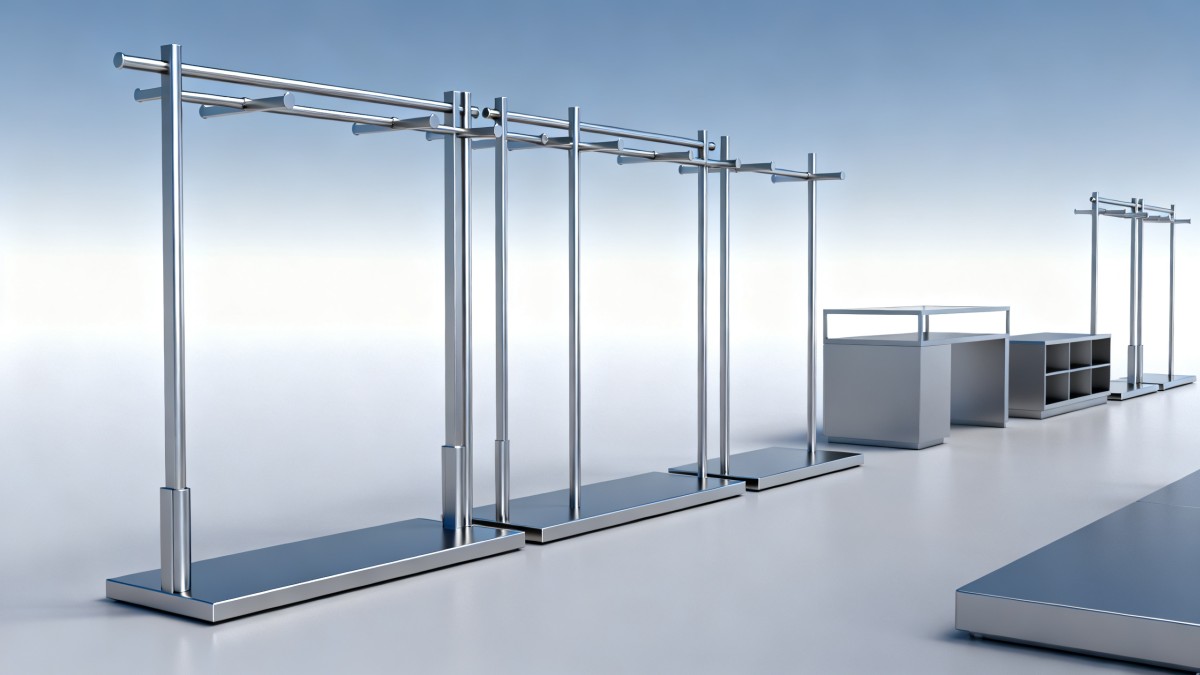
Load capacity still matters, but in commercial furniture and fixtures, it is no longer enough to win a sourcing decision. A clothing rack manufacturer serving global retail, showroom, warehouse, and mixed-use commercial spaces must prove that the finish can withstand daily contact, cleaning chemicals, humidity variation, and repeated product handling over 12–24 months of continuous use.
For information researchers and business evaluators, finish quality is also easier to compare across suppliers than broad marketing claims. Surface texture, coating uniformity, weld cleanup, edge treatment, and color consistency provide visible indicators of factory discipline. In many tenders, these details influence acceptance just as much as static load ratings in the 80–150 kg range for standard retail racks.
Operators see the issue differently. A rack with strong steel but weak finishing may chip within 3–6 months in fitting rooms, back-of-house storage, or high-traffic fashion environments. Once coating failure starts, corrosion risk increases, cleaning becomes harder, and the fixture can quickly undermine the premium image of a store.
This shift is especially important in cross-border sourcing. Asian manufacturing can deliver excellent precision, but global buyers now ask for more than dimensional accuracy. They want aesthetic consistency, low rework rates, predictable lead times, and finish systems aligned with commercial environment standards. That is where G-BCE adds value by benchmarking commercial hardware and fixture quality against practical sourcing expectations and relevant standards such as UL, CE, and BIFMA where applicable.
- Visual durability affects customer perception in the first 1–3 seconds of store interaction.
- Finish defects often create hidden costs through touch-up work, returns, or early replacement.
- Surface treatment quality can signal whether a store fixtures supplier controls pretreatment, curing, and inspection consistently.
What buyers should compare beyond load ratings
When comparing a clothing rack manufacturer, procurement teams should separate structural claims from finish performance claims. A supplier may publish acceptable load data yet still fail in powder adhesion, gloss stability, color matching, or weld area blending. For chain operators, the real question is not only how much a rack carries, but how it looks after 6, 12, and 18 months in service.
The comparison becomes more complex when projects include heavy duty storage racking, front-of-store display racks, and custom retail counters in one package. These categories do not require identical finishing standards. Warehouse-facing units may prioritize abrasion resistance and corrosion protection, while luxury retail fixtures emphasize smoothness, color depth, and low visible weld marks.
The table below helps sourcing teams compare the most decision-relevant dimensions. It is useful for purchasers, operators, and commercial evaluators who need a practical framework before sample approval, pilot rollout, or final quotation review.
This comparison shows why a store fixtures supplier cannot rely on load charts alone. Buyers need at least 4 core checks before approval: finish consistency, substrate preparation, visual detail quality, and compliance documentation. G-BCE supports this process by translating technical manufacturing variables into sourcing language that commercial architects and procurement managers can use.
Three common specification gaps that lead to sourcing disputes
First, many RFQs state color and dimensions but omit finish acceptance criteria. Without clear gloss tolerance, scratch expectations, or weld visibility limits, suppliers may quote on different assumptions. This creates price gaps that look attractive early but become expensive during inspection.
Second, buyers often request “powder coating” as if it were one uniform solution. In practice, powder type, pretreatment sequence, curing discipline, and application environment can vary significantly between factories. Two products with similar appearance on day one may age very differently after repeated cleaning cycles.
Third, sample approval is sometimes based on one display unit rather than a production batch. For projects above 100–300 units, batch consistency becomes just as important as the sample itself. A capable clothing rack manufacturer must demonstrate repeatability, not only craftsmanship on a single showcase piece.
How finish requirements change by application scenario
Not every commercial fixture needs the same finish strategy. A fashion boutique, an outlet stockroom, a department store roll-out, and an airport retail zone all expose clothing racks to different operational pressures. The right specification depends on traffic frequency, cleaning intensity, visual brand positioning, and expected replacement cycle, which commonly ranges from 2–7 years.
For operators and users, the daily pain point is simple: if a rack is easy to scratch, hard to clean, or inconsistent in color, it becomes a maintenance problem. For procurement teams, the pain point is different: over-specifying every fixture raises cost, while under-specifying premium-facing units damages the store environment and may trigger replacement requests.
The table below maps common application scenarios to practical finish priorities. It can be used when comparing a clothing rack manufacturer with a broader store fixtures supplier or a custom retail counters factory managing mixed commercial packages.
This scenario view prevents a common sourcing mistake: applying one finish standard to every fixture type. Smart procurement often splits requirements into 3 layers—customer-facing, mixed-use, and back-of-house—so cost and durability can be optimized together rather than treated as competing goals.
Where finish failures usually appear first
In retail clothing racks, failure often starts at high-contact zones: hanging bar ends, lower leg sections, welded corners, caster mounts, and adjustment points. These areas face repeated impact, friction, or moisture from cleaning. Buyers should request close-up photos or physical samples of these points instead of judging only the front-facing view.
For custom retail counters factory projects that include metal trims or support frames, finish breakdown can also appear where steel meets wood, glass, or composite panels. Different materials move differently with temperature and humidity changes, so detailing and edge sealing matter during installation and long-term use.
A practical review method is to define 5 key inspection points per item: visible face, underside, weld transition, edge safety, and touch area. This creates a clearer approval standard for operators, QA teams, and procurement managers working across multiple supplier categories.
Procurement guide: how to qualify a clothing rack manufacturer with fewer surprises
A disciplined sourcing process reduces both quality risk and negotiation friction. For most commercial fixture programs, qualification can be managed in 4 stages over roughly 2–6 weeks depending on sample complexity, color customization, and factory responsiveness. The goal is not only to compare price, but to confirm whether the finish system is stable enough for rollout.
G-BCE’s cross-sector benchmarking approach is especially useful when a project touches multiple categories such as clothing racks, heavy duty storage racking, POS surroundings, lighting-adjacent hardware, and packaging display fixtures. Instead of evaluating each item in isolation, decision-makers can align them under one commercial environment logic: durability, appearance, compliance, and lifecycle suitability.
The following checklist can help buyers, users, and commercial evaluators structure supplier conversations before placing orders or launching a tender.
- Confirm the use scenario in measurable terms: indoor or semi-open environment, cleaning frequency per week, target service life, and expected traffic level.
- Request finish details, not just product photos: substrate material, pretreatment sequence, coating method, and whether weld areas are manually refined before finishing.
- Approve both appearance and repeatability: one sample for visual review and one batch-level statement for color and process consistency.
- Clarify compliance expectations early: indoor emission sensitivity, relevant commercial standards, packaging protection, and destination market documentation.
Many disputes arise because buyers ask for durability but suppliers hear only weight capacity. A better RFQ uses 6 practical lines: load range, environment type, finish color reference, contact-point durability needs, compliance notes, and packaging method. This is more effective than long generic specifications that leave critical finish issues undefined.
Questions worth asking before sample approval
Ask how the supplier manages touch-up areas, rework thresholds, and coating consistency between the first and later production lots. If the project runs in 2–3 shipping waves, batch stability is vital for visual continuity across stores or regional rollouts.
Ask what protective packaging is used for finished metal parts. Even strong powder coated steel can arrive damaged if packed poorly. Corner guards, film strategy, and carton separation become especially important for polished, matte black, or custom-toned finishes.
Ask whether the supplier can align fixture finish with adjacent elements such as custom retail counters, signage brackets, and lighting hardware. For branded environments, procurement efficiency improves when surface quality is coordinated across categories rather than purchased piece by piece without visual integration.
Five red flags during supplier evaluation
- The quotation lists material thickness and load, but gives no finish process description.
- The sample looks good from a distance, yet weld transitions and lower edges show inconsistent treatment.
- The supplier cannot explain batch color control for orders above 100 units.
- Packaging is designed for freight cost reduction only, not finished-surface protection.
- Compliance language is vague when indoor commercial use or cross-border documentation is requested.
Compliance, lifecycle cost, and the hidden value of finish discipline
Finish quality affects more than appearance. It shapes replacement frequency, maintenance effort, installation acceptance, and even the confidence level of landlords, developers, and brand auditors. In commercial projects, a cheaper rack that needs cosmetic replacement after 12 months may cost more overall than a better-finished unit that stays presentable for 3–5 years in the same environment.
Compliance is also becoming more practical and more visible. Buyers do not always need a long list of certifications, but they do need documentation discipline. Where commercial interiors are involved, material declarations, coating information, and references to applicable standards can help procurement teams avoid delays during project review or import coordination.
For mixed commercial sourcing, G-BCE’s value lies in connecting fixture quality to broader ecosystem performance. A clothing rack manufacturer is no longer evaluated alone. Buyers increasingly compare how racks interact with lighting, packaging presentation, digital retail hardware, and store navigation. Surface quality must support the whole environment, not just the item itself.
This is why benchmarking matters. Rather than relying on isolated claims, sourcing teams can compare factories across 3 practical axes: manufacturing precision, commercial aesthetics, and operational suitability. That perspective helps separate low initial pricing from real procurement value.
FAQ for buyers comparing finish quality
How should I compare powder coated steel racks from different suppliers?
Do not compare on color and load only. Review pretreatment, weld refinement, visible coating consistency, and protection during shipping. If possible, inspect one standard sample and one production-condition sample. This is especially useful for orders in the 50–300 unit range, where repeatability matters as much as first-piece appearance.
Are finish requirements different for heavy duty storage racking and fashion display racks?
Yes. Heavy duty storage racking usually prioritizes impact tolerance, corrosion resistance, and function. Fashion display racks require stronger control of visual details, touch feel, gloss behavior, and visible weld treatment. A smart procurement plan uses different finish thresholds for front-of-house and back-of-house equipment.
What is a realistic lead time for custom-finish commercial racks?
For standard colors and established processes, sample review may take 7–15 days. For custom color matching, mixed-material coordination, or multi-item fixture packages, total pre-production alignment can extend to 2–4 weeks. Buyers should also allow time for packaging confirmation and batch review before shipment.
What do operators usually complain about first?
Most complaints start with scratches, chipped corners, hard-to-clean textures, or finish mismatch between replacement units and original store fixtures. These are often finish system or packaging issues rather than structural failures, which is why operator feedback should be included in procurement evaluation.
Why choose us for benchmarking, sourcing clarity, and next-step evaluation
G-BCE helps global buyers move beyond surface-level product comparison. We translate fixture manufacturing details into business decisions that matter to researchers, users, purchasers, and commercial evaluators. If you are reviewing a clothing rack manufacturer, a store fixtures supplier, or a custom retail counters factory, we help you assess not only whether the product can be made, but whether it is suitable for the intended commercial environment.
Our strength lies in cross-sector benchmarking. Because commercial spaces combine fixtures, lighting, retail technology, consumer display logic, and sustainability expectations, finish quality should not be judged in isolation. We support decision-making around 5 practical areas: parameter confirmation, supplier comparison, finish specification review, compliance alignment, and rollout risk reduction.
You can contact us for specific support on sample evaluation, finish requirement definition, quotation comparison, lead time planning, or multi-category sourcing coordination. If your team needs help reviewing coating expectations, VOC-related documentation, packaging protection, or batch consistency before placing an order, those are exactly the conversations worth having early.
For projects under active planning, prepare 4 inputs before consultation: target application scenario, expected quantity range, preferred finish direction, and destination market requirements. With that information, the discussion becomes faster, more technical, and more useful for real procurement decisions rather than generic product talk.
- commercial furniture
- retail fixtures
- signage
- commercial hardware
- retail technology
- commercial spaces
- commercial architects
- manufacturing precision
- store fixtures supplier
- custom retail counters factory
- clothing rack manufacturer
- VOC emission levels in furniture
- powder coated steel frames
- heavy duty storage racking
News Recommendations
 Report: Global Kraft Paper Market Forecast to Reach $20.5 Billion by 2033
![51a6ab95581761cc26f4318be6520c15]()
Aris Katos
Future of Carbide Coatings
 How to verify Zigbee compatibility when sourcing lighting sensors
![51a6ab95581761cc26f4318be6520c15]()
Aris Katos
Future of Carbide Coatings
 How do packaging customization options affect minimum order quantities in Europe?
![51a6ab95581761cc26f4318be6520c15]()
Aris Katos
Future of Carbide Coatings
 Transom to Acquire Cree LED in Commercial Lighting Ownership Change
![51a6ab95581761cc26f4318be6520c15]()
Aris Katos
Future of Carbide Coatings
 How to plan customer flow in commercial design planning
![51a6ab95581761cc26f4318be6520c15]()
Aris Katos
Future of Carbide Coatings
 USTR Urged to Permanently Suspend Fees on China-Linked Ships
![51a6ab95581761cc26f4318be6520c15]()
Aris Katos
Future of Carbide Coatings
 How to choose comparable stores for retail benchmarking
![51a6ab95581761cc26f4318be6520c15]()
Aris Katos
Future of Carbide Coatings
 How does anchoring affect modular building wind load resistance?
![51a6ab95581761cc26f4318be6520c15]()
Aris Katos
Future of Carbide Coatings
 Amazon Raises European FBA Surcharge to 2% in Ten Markets From November 2
![51a6ab95581761cc26f4318be6520c15]()
Aris Katos
Future of Carbide Coatings
 How to verify a BPA-free test report for baby products
![51a6ab95581761cc26f4318be6520c15]()
Aris Katos
Future of Carbide Coatings
 China's Mandatory Classroom Lighting Standard GB 7793-2025 Takes Effect November 1
![51a6ab95581761cc26f4318be6520c15]()
Aris Katos
Future of Carbide Coatings
 How order volume affects the price of wholesale poly mailers
![51a6ab95581761cc26f4318be6520c15]()
Aris Katos
Future of Carbide Coatings
 US Imposes 50% Tariff on Certain Canadian PET Resin Imports
![51a6ab95581761cc26f4318be6520c15]()
Aris Katos
Future of Carbide Coatings
 How to read the maximum ratings in a semiconductor datasheet
![51a6ab95581761cc26f4318be6520c15]()
Aris Katos
Future of Carbide Coatings
 University of Maryland Develops Bio-Based Packaging to Extend Avocado and Cucumber Shelf Life
![51a6ab95581761cc26f4318be6520c15]()
Aris Katos
Future of Carbide Coatings
 How to verify a cookware manufacturer's induction compatibility claims
![51a6ab95581761cc26f4318be6520c15]()
Aris Katos
Future of Carbide Coatings
 Omdia Forecasts 11.6% Annual Growth in LED Display Revenue Through 2030
![51a6ab95581761cc26f4318be6520c15]()
Aris Katos
Future of Carbide Coatings
 How to verify a pulp molding packaging factory's production capacity
![51a6ab95581761cc26f4318be6520c15]()
Aris Katos
Future of Carbide Coatings
 Curion Survey: Half of Consumers Frustrated by Sustainable Packaging
![51a6ab95581761cc26f4318be6520c15]()
Aris Katos
Future of Carbide Coatings
 How to assess the credibility of market insight content
![51a6ab95581761cc26f4318be6520c15]()
Aris Katos
Future of Carbide Coatings
 US Removes 50% Additional Tariff on Selected Canadian Packaging Products
![51a6ab95581761cc26f4318be6520c15]()
Aris Katos
Future of Carbide Coatings
 Will a waterproof dimmable LED driver work with your existing dimmer?
![51a6ab95581761cc26f4318be6520c15]()
Aris Katos
Future of Carbide Coatings
 Charter Next Generation Raises Film PCR Use 30%, Advances Food-Grade Applications
![51a6ab95581761cc26f4318be6520c15]()
Aris Katos
Future of Carbide Coatings
 How to choose a dog harness and leash for a dog that pulls hard
![51a6ab95581761cc26f4318be6520c15]()
Aris Katos
Future of Carbide Coatings
 How to respect local customs when negotiating with overseas suppliers
![51a6ab95581761cc26f4318be6520c15]()
Aris Katos
Future of Carbide Coatings
 RFID Recycling Challenges Bring Paper-Based and Chipless Tags Into Focus
![51a6ab95581761cc26f4318be6520c15]()
Aris Katos
Future of Carbide Coatings
 How to choose commercial lighting for offices that reduces glare
![51a6ab95581761cc26f4318be6520c15]()
Aris Katos
Future of Carbide Coatings
 Queue Launches Fully Automated Robotic Pharmacy Kiosk for 30-Second Dispensing
![51a6ab95581761cc26f4318be6520c15]()
Aris Katos
Future of Carbide Coatings
 Can your supermarket store fixtures supplier meet your opening date?
![51a6ab95581761cc26f4318be6520c15]()
Aris Katos
Future of Carbide Coatings
 Shopify POS UI Extensions 2026-10 Adds Virtual Lists and Custom Row Templates
![51a6ab95581761cc26f4318be6520c15]()
Aris Katos
Future of Carbide Coatings
 How to assess smart office furniture suppliers’ North American support
![51a6ab95581761cc26f4318be6520c15]()
Aris Katos
Future of Carbide Coatings
 Aqara Launches Smart Lighting Range to Advance AI Spatial Intelligence
![51a6ab95581761cc26f4318be6520c15]()
Aris Katos
Future of Carbide Coatings
 How to assess demand forecasts in a lighting intelligence report
![51a6ab95581761cc26f4318be6520c15]()
Aris Katos
Future of Carbide Coatings
 Billerud推出PharmaKraft纤维基医药包装材料
![51a6ab95581761cc26f4318be6520c15]()
Aris Katos
Future of Carbide Coatings
 How to assess supplier reliability in global supply chain sourcing
![51a6ab95581761cc26f4318be6520c15]()
Aris Katos
Future of Carbide Coatings
 Omdia Forecasts 11.6% CAGR for Global LED Video Display Market in 2026–2030
![51a6ab95581761cc26f4318be6520c15]()
Aris Katos
Future of Carbide Coatings
 How to verify an LFGB testing laboratory's accreditation scope
![51a6ab95581761cc26f4318be6520c15]()
Aris Katos
Future of Carbide Coatings
 How to assess a workplace interior supplier's installation scope
![51a6ab95581761cc26f4318be6520c15]()
Aris Katos
Future of Carbide Coatings
 What records are needed for an ISO 9001 furniture factory audit?
![51a6ab95581761cc26f4318be6520c15]()
Aris Katos
Future of Carbide Coatings







































