
Healthcare furniture suppliers are being asked for cleaner seam details
Time
Click Count
Healthcare furniture supplier teams are facing sharper scrutiny as hospitals and labs demand cleaner seam details, lower VOC emission levels in furniture, and easier-to-sanitize surfaces. For procurement and benchmarking professionals, this shift connects directly to anti-static laboratory stools, fire retardant foam standards (NFPA 260), Greenguard certified commercial furniture, and ISO 9001 furniture factory performance—turning seam design into a critical indicator of safety, durability, and long-term commercial value.
For information researchers, facility users, sourcing managers, and commercial evaluators, seam construction is no longer a minor aesthetic detail. In healthcare environments, every joint, stitch line, weld transition, and upholstery edge can affect infection control routines, chemical resistance, maintenance time, and replacement cost over a 5- to 10-year ownership cycle.
This is especially relevant across hospitals, outpatient clinics, diagnostic labs, and clean-support spaces where furniture is exposed to repeated wipe-downs, disinfectants, rolling loads, and high-touch traffic. Within the broader commercial ecosystem tracked by G-BCE, cleaner seam details are becoming a measurable sourcing criterion that links design quality with safety, compliance readiness, and operational resilience.
Why Cleaner Seam Details Now Matter More in Healthcare Procurement
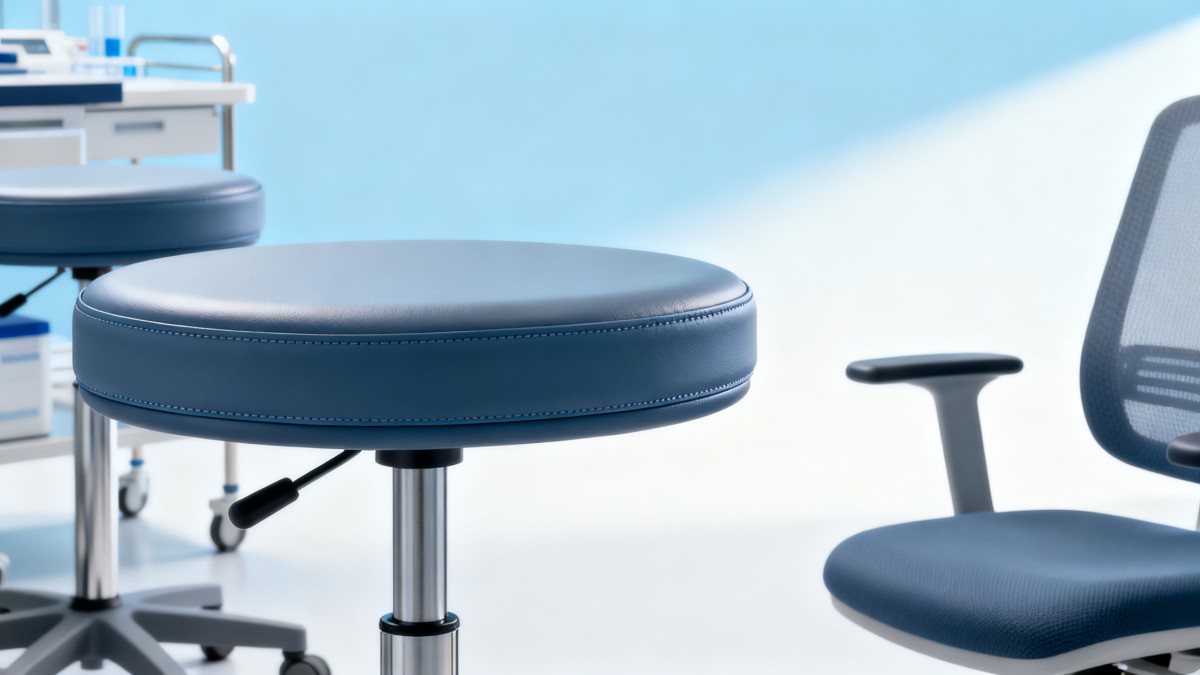
Healthcare furniture has always required durability, but procurement expectations have tightened in the last 3 to 5 years. Teams are now reviewing seam geometry as part of infection prevention, material emissions, and lifecycle cost. A visible stitch gap, deep crevice, or uneven upholstery transition can trap debris, slow sanitation, and reduce confidence during facility audits.
In practical terms, cleaner seam details usually refer to tighter upholstery lines, reduced gap depth, smoother thermoformed or welded transitions, fewer exposed staples, and edge treatments that tolerate frequent cleaning. In areas cleaned 2 to 6 times per day, those details influence not just hygiene but also labor efficiency and visual wear.
For laboratory and clinical seating, seam quality also affects electrostatic behavior, fluid ingress risk, and foam protection. Anti-static laboratory stools, for example, benefit from surface constructions that minimize particle catch points while supporting easy wipe-down protocols. The same design principle extends to patient seating, nurse stations, waiting areas, and treatment support furniture.
From visual finish to operational risk
A seam that looks acceptable in a showroom may fail under healthcare use. Repeated exposure to quaternary ammonium compounds, diluted bleach solutions, hydrogen peroxide cleaners, and alcohol-based disinfectants can stress weak seam lines within 12 to 24 months. Once cracking or separation begins, sanitation reliability drops and replacement planning accelerates.
This is why evaluators increasingly compare seam construction alongside foam specification, substrate integrity, and finish chemistry. A chair or stool with a lower upfront cost can become more expensive if seam failure appears after 18 months instead of performing for 5 years under standard preventive maintenance.
Key sourcing signals buyers are watching
- Whether seams are sealed, minimized, heat-welded, or positioned away from high-fluid contact zones.
- Whether upholstery and adhesives support low VOC targets, especially in enclosed patient or lab spaces.
- Whether foam and cover systems align with common flammability benchmarks such as NFPA 260 for smolder resistance considerations.
- Whether the factory can document repeatable quality through ISO 9001 process control and inspection records.
The market shift is not only technical; it is also commercial. Facilities want furniture that supports cleaning staff, reduces complaint rates, and preserves appearance across large rollouts of 50, 200, or even 1,000 units. Cleaner seam details are therefore becoming a procurement language shared by design teams, infection control reviewers, and sourcing directors.
How Seam Design Connects to VOC, Fire Safety, and Surface Performance
Seam details cannot be evaluated in isolation. In healthcare furniture, they interact with upholstery chemistry, foam behavior, substrate edges, and manufacturing consistency. A clean-looking seam may still underperform if the adhesive system has high emissions, if the foam compresses unevenly, or if the cover material weakens after repeated disinfection cycles.
Low-VOC performance has become especially important in patient-facing environments, staff work zones, and enclosed consultation rooms. Greenguard certified commercial furniture is often used as a reference point because it helps buyers discuss indoor air considerations in a concrete way. While certification scope varies by product, the purchasing logic is clear: lower emissions reduce environmental concerns during installation and ongoing use.
Foam selection introduces another layer of evaluation. Where upholstered seating is involved, specifiers often ask whether foam assemblies align with applicable fire performance expectations, including standards frequently referenced in commercial seating discussions such as NFPA 260. The seam line matters because it influences how the cover remains tensioned, protected, and stable over time.
Typical performance relationships in healthcare seating
The table below shows how seam quality affects broader product performance areas that matter in healthcare and laboratory settings.
The main conclusion is that clean seam work is a system attribute rather than an isolated cosmetic benefit. Buyers should request documentation on materials, cleaners tested, and construction method, not just close-up photos of finished upholstery.
Common material and construction checkpoints
- Review whether seams are stitched, heat-sealed, RF-welded, or chemically bonded, depending on product type.
- Confirm whether the upholstery passes repeated disinfectant exposure without cracking, delamination, or color instability.
- Check whether edge radii and seam placement reduce dirt accumulation in high-contact zones such as seat pans and back transitions.
- Ask whether the same seam quality is maintained across pilot units and production runs of 100 units or more.
For sourcing teams comparing Asian manufacturing partners, consistency across batch production is often the deciding factor. This is where technical benchmarking becomes valuable: a supplier may offer acceptable prototypes, but the real question is whether seam tolerances and finishing quality remain stable across multiple purchase orders and compressed delivery windows.
What Procurement Teams Should Ask Healthcare Furniture Suppliers
A strong supplier conversation should move beyond general claims such as “medical grade” or “easy clean.” Procurement teams need a practical checklist that ties seam details to inspection criteria, compliance readiness, and service life. In most projects, 4 to 6 targeted questions will reveal whether a supplier truly understands healthcare performance requirements.
This matters for both direct-use furniture and supporting commercial spaces linked to healthcare operations, including waiting lounges, staff rooms, pharmacy counters, and laboratory support seating. The more standardized the questions, the easier it becomes to compare bids across manufacturers and regions.
Factories operating under ISO 9001 frameworks should be able to show controlled processes for incoming material checks, seam workmanship inspections, corrective action tracking, and final quality release. That does not guarantee perfect products, but it does indicate a more disciplined pathway for repeatability and traceability.
Practical supplier evaluation matrix
The following comparison table can help commercial buyers and benchmarking professionals align technical and sourcing criteria during RFQ and sample review stages.
The strongest suppliers are usually the ones that answer with process details, not just catalog language. If a team can explain seam positioning, adhesive selection, cleaning compatibility, and inspection tolerance in the same conversation, they are typically easier to qualify for serious healthcare projects.
Questions worth asking before approval
- What cleaning agents have been tested, and over how many wipe cycles or exposure intervals?
- Which seams are most vulnerable in use, and what design changes were made to reduce failure risk?
- Can the supplier provide the same upholstery lot, foam type, and seam workmanship across phased deliveries in 2 to 3 batches?
- What is the normal lead time for mockup samples, pre-production approval, and full shipment readiness?
In many cross-border programs, sample development takes 10 to 21 days, while bulk production may require 4 to 8 weeks depending on customization level, material approvals, and packaging method. Seam complexity can affect this schedule, especially when cleaner-edge upholstery or welded detailing is required.
Application Scenarios, Risks, and Implementation Priorities
Different healthcare settings place different stresses on furniture seams. A patient waiting chair faces continuous occupancy and visible wear, while a lab stool may face aggressive cleaning and static-sensitive workflows. Understanding the use case helps teams avoid overbuying in low-risk zones and under-specifying in critical zones.
In outpatient and ambulatory spaces, visual cleanliness often shapes first impressions. Seams that discolor, open, or accumulate residue can damage perceived hygiene even when cleaning protocols are followed. In laboratories, by contrast, function takes priority: stable surfaces, anti-static behavior, and minimal dirt traps are central to daily usability.
Implementation should start with zoning. Many buyers divide projects into at least 3 categories: clinical contact areas, staff work areas, and public waiting or support zones. Each zone can then be assigned a suitable seam standard, upholstery type, and maintenance expectation.
Typical zone-based recommendations
The table below illustrates how seam requirements often vary by application and risk profile.
This zoning approach helps teams match budget to actual risk. It also improves communication between architects, infection control reviewers, and procurement officers who may otherwise use different evaluation language for the same furniture package.
Frequent mistakes during specification
- Approving a showroom sample without requesting close-up seam photos from bulk production units.
- Focusing on color and price while skipping cleaner compatibility documentation.
- Using the same upholstery specification for public seating and lab seating despite different cleaning and static requirements.
- Assuming ISO 9001 alone proves product suitability, rather than reviewing actual construction details and test evidence.
A disciplined implementation plan usually includes a mockup review, a cleaning trial, and a final workmanship checklist. On larger projects, buyers often inspect 3 to 5 critical detail points per item, including seam straightness, edge closure, foam tension, and underside finishing before approving mass production.
FAQ and Strategic Takeaways for Buyers Benchmarking Suppliers
As seam quality becomes more visible in healthcare furniture evaluations, buyers benefit from clear, repeatable screening criteria. The goal is not to chase cosmetic perfection, but to identify construction details that improve sanitation performance, preserve appearance, and reduce replacement pressure over time.
For organizations sourcing across multiple categories, from commercial furniture and fixtures to broader supply-chain components, this issue fits a larger benchmarking mindset. Cleaner seams reflect how well a supplier translates technical requirements into production discipline, especially when projects involve international standards and multi-site deployment.
How do I know if a cleaner seam detail is truly better?
Ask for three things: a close-up sample, cleaner compatibility evidence, and a production inspection standard. A better seam should show minimal crevices, stable tension after use simulation, and a surface that can tolerate repeated sanitation without peeling or splitting. Reviewing performance after 500 to 1,000 wipe cycles is more useful than relying on appearance alone.
Are Greenguard and ISO 9001 enough for supplier approval?
They are useful indicators, but not complete decision tools. Greenguard-related references support emission discussions, while ISO 9001 suggests process management. Buyers still need product-level evidence on seam construction, foam behavior, sanitation durability, and any relevant fire-related testing pathway such as NFPA 260 where the specification requires it.
What lead times should I expect for customized healthcare seating?
For many commercial programs, sample confirmation takes about 10 to 21 days, and production takes 4 to 8 weeks. If the project requires special upholstery, anti-static components, or revised seam detailing, add extra time for material approval and pilot inspection. Packaging for export healthcare projects may also add 3 to 7 days.
Which buyers benefit most from seam-focused benchmarking?
This approach is especially valuable for hospital groups, laboratory operators, design consultants, commercial developers, and sourcing directors managing repeated furniture purchases across regions. It is also useful for business evaluators comparing Asian manufacturing options against global healthcare performance expectations.
For teams seeking better alignment between product performance and procurement decisions, G-BCE supports a more structured view of healthcare furniture sourcing by connecting seam design, material compliance, production quality, and commercial value. If you are reviewing suppliers, comparing seating specifications, or planning a healthcare rollout, contact us to get a tailored benchmarking perspective and explore more solution pathways.
- commercial furniture
- commercial spaces
- commercial developers
- international standards
- technical benchmarking
- healthcare furniture supplier
- ISO 9001 furniture factory
- Greenguard certified commercial furniture
- fire retardant foam standards (NFPA 260)
- VOC emission levels in furniture
- anti-static laboratory stools
News Recommendations
 How to verify Zigbee compatibility when sourcing lighting sensors
![51a6ab95581761cc26f4318be6520c15]()
Aris Katos
Future of Carbide Coatings
 How do packaging customization options affect minimum order quantities in Europe?
![51a6ab95581761cc26f4318be6520c15]()
Aris Katos
Future of Carbide Coatings
 Transom to Acquire Cree LED in Commercial Lighting Ownership Change
![51a6ab95581761cc26f4318be6520c15]()
Aris Katos
Future of Carbide Coatings
 How to plan customer flow in commercial design planning
![51a6ab95581761cc26f4318be6520c15]()
Aris Katos
Future of Carbide Coatings
 USTR Urged to Permanently Suspend Fees on China-Linked Ships
![51a6ab95581761cc26f4318be6520c15]()
Aris Katos
Future of Carbide Coatings
 How to choose comparable stores for retail benchmarking
![51a6ab95581761cc26f4318be6520c15]()
Aris Katos
Future of Carbide Coatings
 How does anchoring affect modular building wind load resistance?
![51a6ab95581761cc26f4318be6520c15]()
Aris Katos
Future of Carbide Coatings
 Amazon Raises European FBA Surcharge to 2% in Ten Markets From November 2
![51a6ab95581761cc26f4318be6520c15]()
Aris Katos
Future of Carbide Coatings
 How to verify a BPA-free test report for baby products
![51a6ab95581761cc26f4318be6520c15]()
Aris Katos
Future of Carbide Coatings
 China's Mandatory Classroom Lighting Standard GB 7793-2025 Takes Effect November 1
![51a6ab95581761cc26f4318be6520c15]()
Aris Katos
Future of Carbide Coatings
 How order volume affects the price of wholesale poly mailers
![51a6ab95581761cc26f4318be6520c15]()
Aris Katos
Future of Carbide Coatings
 US Imposes 50% Tariff on Certain Canadian PET Resin Imports
![51a6ab95581761cc26f4318be6520c15]()
Aris Katos
Future of Carbide Coatings
 How to read the maximum ratings in a semiconductor datasheet
![51a6ab95581761cc26f4318be6520c15]()
Aris Katos
Future of Carbide Coatings
 University of Maryland Develops Bio-Based Packaging to Extend Avocado and Cucumber Shelf Life
![51a6ab95581761cc26f4318be6520c15]()
Aris Katos
Future of Carbide Coatings
 How to verify a cookware manufacturer's induction compatibility claims
![51a6ab95581761cc26f4318be6520c15]()
Aris Katos
Future of Carbide Coatings
 Omdia Forecasts 11.6% Annual Growth in LED Display Revenue Through 2030
![51a6ab95581761cc26f4318be6520c15]()
Aris Katos
Future of Carbide Coatings
 How to verify a pulp molding packaging factory's production capacity
![51a6ab95581761cc26f4318be6520c15]()
Aris Katos
Future of Carbide Coatings
 Curion Survey: Half of Consumers Frustrated by Sustainable Packaging
![51a6ab95581761cc26f4318be6520c15]()
Aris Katos
Future of Carbide Coatings
 How to assess the credibility of market insight content
![51a6ab95581761cc26f4318be6520c15]()
Aris Katos
Future of Carbide Coatings
 US Removes 50% Additional Tariff on Selected Canadian Packaging Products
![51a6ab95581761cc26f4318be6520c15]()
Aris Katos
Future of Carbide Coatings
 Will a waterproof dimmable LED driver work with your existing dimmer?
![51a6ab95581761cc26f4318be6520c15]()
Aris Katos
Future of Carbide Coatings
 Charter Next Generation Raises Film PCR Use 30%, Advances Food-Grade Applications
![51a6ab95581761cc26f4318be6520c15]()
Aris Katos
Future of Carbide Coatings
 How to choose a dog harness and leash for a dog that pulls hard
![51a6ab95581761cc26f4318be6520c15]()
Aris Katos
Future of Carbide Coatings
 How to respect local customs when negotiating with overseas suppliers
![51a6ab95581761cc26f4318be6520c15]()
Aris Katos
Future of Carbide Coatings
 RFID Recycling Challenges Bring Paper-Based and Chipless Tags Into Focus
![51a6ab95581761cc26f4318be6520c15]()
Aris Katos
Future of Carbide Coatings
 How to choose commercial lighting for offices that reduces glare
![51a6ab95581761cc26f4318be6520c15]()
Aris Katos
Future of Carbide Coatings
 Queue Launches Fully Automated Robotic Pharmacy Kiosk for 30-Second Dispensing
![51a6ab95581761cc26f4318be6520c15]()
Aris Katos
Future of Carbide Coatings
 Can your supermarket store fixtures supplier meet your opening date?
![51a6ab95581761cc26f4318be6520c15]()
Aris Katos
Future of Carbide Coatings
 Shopify POS UI Extensions 2026-10 Adds Virtual Lists and Custom Row Templates
![51a6ab95581761cc26f4318be6520c15]()
Aris Katos
Future of Carbide Coatings
 How to assess smart office furniture suppliers’ North American support
![51a6ab95581761cc26f4318be6520c15]()
Aris Katos
Future of Carbide Coatings
 Aqara Launches Smart Lighting Range to Advance AI Spatial Intelligence
![51a6ab95581761cc26f4318be6520c15]()
Aris Katos
Future of Carbide Coatings
 How to assess demand forecasts in a lighting intelligence report
![51a6ab95581761cc26f4318be6520c15]()
Aris Katos
Future of Carbide Coatings
 Billerud推出PharmaKraft纤维基医药包装材料
![51a6ab95581761cc26f4318be6520c15]()
Aris Katos
Future of Carbide Coatings
 How to assess supplier reliability in global supply chain sourcing
![51a6ab95581761cc26f4318be6520c15]()
Aris Katos
Future of Carbide Coatings
 Omdia Forecasts 11.6% CAGR for Global LED Video Display Market in 2026–2030
![51a6ab95581761cc26f4318be6520c15]()
Aris Katos
Future of Carbide Coatings
 How to verify an LFGB testing laboratory's accreditation scope
![51a6ab95581761cc26f4318be6520c15]()
Aris Katos
Future of Carbide Coatings
 How to assess a workplace interior supplier's installation scope
![51a6ab95581761cc26f4318be6520c15]()
Aris Katos
Future of Carbide Coatings
 What records are needed for an ISO 9001 furniture factory audit?
![51a6ab95581761cc26f4318be6520c15]()
Aris Katos
Future of Carbide Coatings
 How to choose AI marketing tools that work with your existing CRM
![51a6ab95581761cc26f4318be6520c15]()
Aris Katos
Future of Carbide Coatings







































