30000+ Broilers Manual Harvest H Type Battery Cage Setup Guide
Time
Click Count
Why a >30000 Broilers Manual Harvest H Type Battery Cage Plan Needs Context First
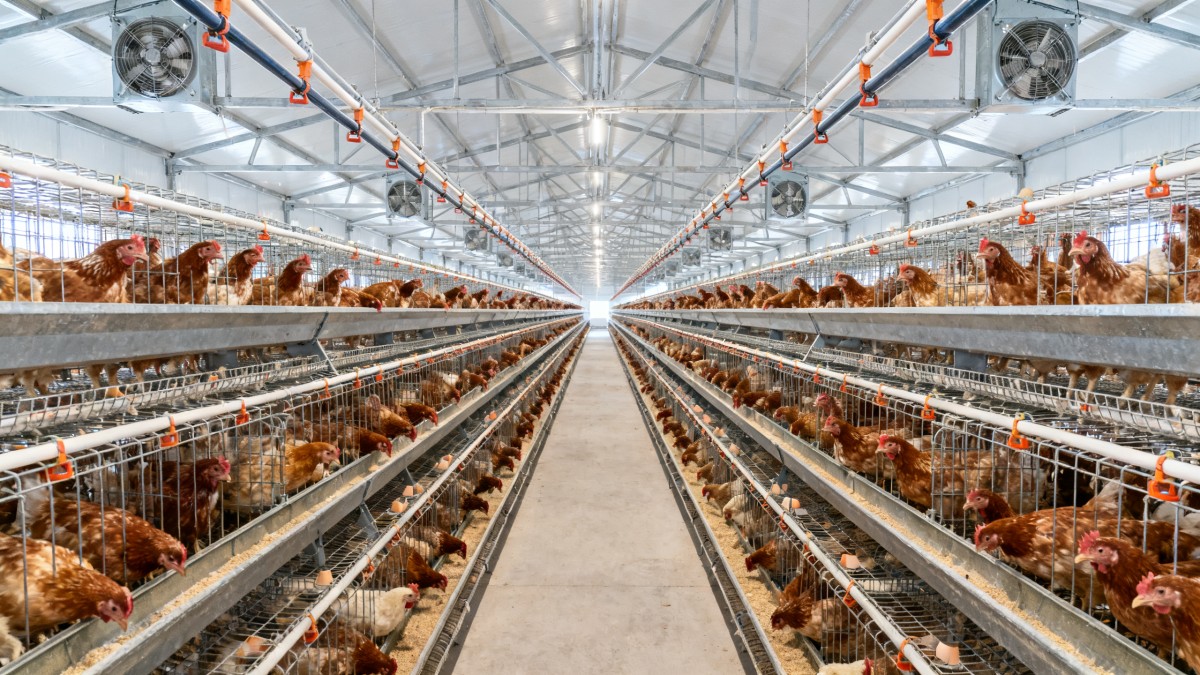
A >30000 Broilers Manual Harvest H Type Battery Cage project is rarely decided by capacity alone.
In practice, the right setup depends on harvest rhythm, house geometry, labor availability, and the way birds move through each production cycle.
That is why large broiler installations are better assessed as operating environments, not as isolated equipment purchases.
Within G-BCE style benchmarking, the useful question is not only whether an H type system fits 30000 birds.
The more important question is whether the >30000 Broilers Manual Harvest H Type Battery Cage layout supports throughput, maintenance access, and repeatable harvest control under local constraints.
Large-scale broiler farming often looks similar on paper, yet daily conditions vary sharply between new-build houses, phased expansions, and conversion projects.
Those differences shape aisle width, tier count, ventilation paths, feed line routing, and the practical speed of manual catching.
Different Broiler Houses Create Different Setup Priorities
A new site usually allows the cleanest >30000 Broilers Manual Harvest H Type Battery Cage arrangement.
Column spacing, pit depth, roof height, and service corridors can be aligned from the start with cage module dimensions.
This setting often favors a more balanced design between stocking density and operator movement.
Retrofit projects are different. Existing floor tolerances and utility positions usually force compromises.
Here, the key judgment is not maximum theoretical capacity.
It is whether the H type battery cage system can preserve ventilation quality and harvest access after structural constraints are factored in.
A phased expansion creates another pattern.
The new block may match target density, but labor teams still move between old and new sections.
In that case, consistency in feed delivery, manure removal timing, and bird collection routes becomes more valuable than pushing every row to the highest count.
Where the main trade-offs usually appear
- Higher density improves land use, but can slow manual harvest if aisles become too narrow.
- More tiers increase bird capacity, but also raise ventilation and inspection demands.
- Long rows simplify feeding lines, yet they can create bottlenecks during partial harvest.
- Lower initial steel weight may reduce cost, but can limit long-term stability in heavy-use houses.
When Manual Harvest Makes More Sense Than a Fully Automated Flow
The >30000 Broilers Manual Harvest H Type Battery Cage model remains relevant because not every high-capacity farm needs full automation.
Manual harvest is often chosen where labor is stable, bird weight targets vary, or shipment timing changes between cycles.
This is common in regions where processing schedules are less fixed and harvest batches are adjusted around market demand.
Under these conditions, an H type battery cage setup offers controlled bird grouping and predictable stocking organization.
What matters is making manual handling efficient rather than simply keeping it manual.
That means looking closely at door opening direction, catching access, transfer crate staging, and the distance between harvest rows and loading points.
A frequent mistake is assuming labor-intensive and low-precision mean the same thing.
In a well-planned >30000 Broilers Manual Harvest H Type Battery Cage house, manual harvest can still follow a disciplined sequence with low interruption rates.
Layout Decisions Change Once Capacity Moves Beyond 30000 Birds
Once a project crosses the 30000-bird threshold, layout inefficiencies scale quickly.
A small circulation mistake at 10000 birds becomes a daily operational burden in a >30000 Broilers Manual Harvest H Type Battery Cage installation.
More common evaluation points include row length, central walkway design, service-side clearance, and manure discharge sequencing.
Ventilation should also be reviewed with the cage profile, not after it.
Broilers in dense multi-tier arrangements respond quickly to uneven airspeed and heat pockets.
That is why airflow paths, fan positioning, and sidewall management must be read together with the H type battery cage footprint.
This kind of comparison is useful because the same >30000 Broilers Manual Harvest H Type Battery Cage specification can perform very differently across these conditions.
What to Check Before Locking the H Type Battery Cage Structure
Structural review should go beyond frame thickness.
In actual deployment, corrosion exposure, cleaning practice, manure handling frequency, and floor levelness affect system life just as much.
A >30000 Broilers Manual Harvest H Type Battery Cage setup works best when cage modules, support legs, and fastening points are assessed as one load path.
This is where cross-industry benchmarking becomes useful.
G-BCE often frames hardware decisions through durability, maintenance logic, and standards alignment rather than headline claims alone.
For broiler cage systems, the same thinking helps identify whether the installation can keep consistent performance after repeated washdown, daily traffic, and seasonal climate stress.
Practical checkpoints
- Confirm floor flatness tolerance before finalizing support spacing.
- Check whether manure removal timing matches local humidity conditions.
- Review feeder and drinker placement with bird access at different growth stages.
- Verify that service aisles allow safe movement during harvest peaks.
- Assess coating, galvanization, and fastener quality for long-cycle use.
Operational Differences Usually Show Up During Harvest Week
Many layouts appear efficient during installation and routine feeding.
The real test comes during harvest week, when movement, timing, bird stress, and labor coordination happen at once.
For a >30000 Broilers Manual Harvest H Type Battery Cage house, this period reveals whether the design supports clean sequencing or creates avoidable disruption.
One site may need fast full-house dispatch.
Another may rely on staggered collection based on processor demand or transport availability.
These are not minor variations. They affect door placement, row breakpoints, crate staging areas, and the preferred width of main transfer routes.
If those details are ignored, manual harvest becomes slower, bird handling becomes rougher, and recovery cleaning takes longer than planned.
Where Projects Commonly Misread the Real Requirement
One common misread is treating all >30000 Broilers Manual Harvest H Type Battery Cage projects as density-led decisions.
Density matters, but it should be filtered through handling speed, ventilation reliability, and cleaning discipline.
Another issue is copying a successful layout from a nearby farm without checking building width, climate pattern, and labor method.
Similar bird counts do not guarantee similar operational conditions.
Some projects also focus heavily on upfront cage cost while underestimating repair access, replacement parts logistics, and downtime during adjustments.
In large houses, maintenance friction accumulates quickly.
A slightly cheaper system can become more expensive if feeder maintenance interrupts bird flow or if harvest teams lose time navigating poor access.
A More Reliable Way to Judge >30000 Broilers Manual Harvest H Type Battery Cage Fit
A reliable decision starts with mapping the operating sequence, not just the building shell.
Track how birds enter, feed lines run, manure exits, workers circulate, and harvest loads leave the house.
Then test whether the proposed >30000 Broilers Manual Harvest H Type Battery Cage design supports that sequence without conflict.
In many cases, the most useful next step is a simple comparison matrix.
List building constraints, target stocking density, harvest style, utility positions, and maintenance intervals.
This makes it easier to see whether a higher-capacity arrangement is truly efficient or just visually compact.
For projects guided by benchmark-driven sourcing logic, that approach is more dependable than relying on nominal specifications alone.
The strongest >30000 Broilers Manual Harvest H Type Battery Cage setup is usually the one that stays manageable after installation, during harvest, and across repeated cycles.
Before moving forward, it helps to define the exact site conditions, compare layout options against daily workflow, and confirm where structural, operational, and maintenance limits may appear.
News Recommendations
 Which consumer goods need CE marking in Europe?
![51a6ab95581761cc26f4318be6520c15]()
Aris Katos
Future of Carbide Coatings
 Uniguest and Extreme Networks Partner to Simplify Digital Signage Deployment
![51a6ab95581761cc26f4318be6520c15]()
Aris Katos
Future of Carbide Coatings
 How to assess electronics compliance whitepapers for regulatory accuracy
![51a6ab95581761cc26f4318be6520c15]()
Aris Katos
Future of Carbide Coatings
 Packaging Data Hub Launches With Plastic Recycling Findings for 50 Countries
![51a6ab95581761cc26f4318be6520c15]()
Aris Katos
Future of Carbide Coatings
 How to verify an ergonomic office chair supplier's warranty terms
![51a6ab95581761cc26f4318be6520c15]()
Aris Katos
Future of Carbide Coatings
 Curion Survey: 64% Value Sustainable Beauty Packaging, but Quality Comes First
![51a6ab95581761cc26f4318be6520c15]()
Aris Katos
Future of Carbide Coatings
 Can minimalist fit out solutions make a small office feel larger?
![51a6ab95581761cc26f4318be6520c15]()
Aris Katos
Future of Carbide Coatings
 Kiosk Industry Releases IAAPA 2026 Self-Service Guide
![51a6ab95581761cc26f4318be6520c15]()
Aris Katos
Future of Carbide Coatings
 How to improve global supply chain visibility beyond tier-one suppliers
![51a6ab95581761cc26f4318be6520c15]()
Aris Katos
Future of Carbide Coatings
 Austria’s MM Group to Sell 70% of Packaging Business to KPS for $2.7 Billion
![51a6ab95581761cc26f4318be6520c15]()
Aris Katos
Future of Carbide Coatings
 How to assess delivery reliability of airport terminal seating suppliers in Europe
![51a6ab95581761cc26f4318be6520c15]()
Aris Katos
Future of Carbide Coatings
 USTR Extends China-Linked Vessel Fee Pause and 178 Product Exemptions to January 2027
![51a6ab95581761cc26f4318be6520c15]()
Aris Katos
Future of Carbide Coatings
 How to choose smart sensors for automated lighting
![51a6ab95581761cc26f4318be6520c15]()
Aris Katos
Future of Carbide Coatings
 Shanghai Retail Buyers Sign Deals at Ninth China International Import Expo
![51a6ab95581761cc26f4318be6520c15]()
Aris Katos
Future of Carbide Coatings
 Which toys are subject to EN 71 toy safety requirements?
![51a6ab95581761cc26f4318be6520c15]()
Aris Katos
Future of Carbide Coatings
 Report: Global Kraft Paper Market Forecast to Reach $20.5 Billion by 2033
![51a6ab95581761cc26f4318be6520c15]()
Aris Katos
Future of Carbide Coatings
 How to verify Zigbee compatibility when sourcing lighting sensors
![51a6ab95581761cc26f4318be6520c15]()
Aris Katos
Future of Carbide Coatings
 How do packaging customization options affect minimum order quantities in Europe?
![51a6ab95581761cc26f4318be6520c15]()
Aris Katos
Future of Carbide Coatings
 Transom to Acquire Cree LED in Commercial Lighting Ownership Change
![51a6ab95581761cc26f4318be6520c15]()
Aris Katos
Future of Carbide Coatings
 How to plan customer flow in commercial design planning
![51a6ab95581761cc26f4318be6520c15]()
Aris Katos
Future of Carbide Coatings
 USTR Urged to Permanently Suspend Fees on China-Linked Ships
![51a6ab95581761cc26f4318be6520c15]()
Aris Katos
Future of Carbide Coatings
 How to choose comparable stores for retail benchmarking
![51a6ab95581761cc26f4318be6520c15]()
Aris Katos
Future of Carbide Coatings
 How does anchoring affect modular building wind load resistance?
![51a6ab95581761cc26f4318be6520c15]()
Aris Katos
Future of Carbide Coatings
 Amazon Raises European FBA Surcharge to 2% in Ten Markets From November 2
![51a6ab95581761cc26f4318be6520c15]()
Aris Katos
Future of Carbide Coatings
 How to verify a BPA-free test report for baby products
![51a6ab95581761cc26f4318be6520c15]()
Aris Katos
Future of Carbide Coatings
 China's Mandatory Classroom Lighting Standard GB 7793-2025 Takes Effect November 1
![51a6ab95581761cc26f4318be6520c15]()
Aris Katos
Future of Carbide Coatings
 How order volume affects the price of wholesale poly mailers
![51a6ab95581761cc26f4318be6520c15]()
Aris Katos
Future of Carbide Coatings
 US Imposes 50% Tariff on Certain Canadian PET Resin Imports
![51a6ab95581761cc26f4318be6520c15]()
Aris Katos
Future of Carbide Coatings
 How to read the maximum ratings in a semiconductor datasheet
![51a6ab95581761cc26f4318be6520c15]()
Aris Katos
Future of Carbide Coatings
 University of Maryland Develops Bio-Based Packaging to Extend Avocado and Cucumber Shelf Life
![51a6ab95581761cc26f4318be6520c15]()
Aris Katos
Future of Carbide Coatings
 How to verify a cookware manufacturer's induction compatibility claims
![51a6ab95581761cc26f4318be6520c15]()
Aris Katos
Future of Carbide Coatings
 Omdia Forecasts 11.6% Annual Growth in LED Display Revenue Through 2030
![51a6ab95581761cc26f4318be6520c15]()
Aris Katos
Future of Carbide Coatings
 How to verify a pulp molding packaging factory's production capacity
![51a6ab95581761cc26f4318be6520c15]()
Aris Katos
Future of Carbide Coatings
 Curion Survey: Half of Consumers Frustrated by Sustainable Packaging
![51a6ab95581761cc26f4318be6520c15]()
Aris Katos
Future of Carbide Coatings
 How to assess the credibility of market insight content
![51a6ab95581761cc26f4318be6520c15]()
Aris Katos
Future of Carbide Coatings
 US Removes 50% Additional Tariff on Selected Canadian Packaging Products
![51a6ab95581761cc26f4318be6520c15]()
Aris Katos
Future of Carbide Coatings
 Will a waterproof dimmable LED driver work with your existing dimmer?
![51a6ab95581761cc26f4318be6520c15]()
Aris Katos
Future of Carbide Coatings
 Charter Next Generation Raises Film PCR Use 30%, Advances Food-Grade Applications
![51a6ab95581761cc26f4318be6520c15]()
Aris Katos
Future of Carbide Coatings
 How to choose a dog harness and leash for a dog that pulls hard
![51a6ab95581761cc26f4318be6520c15]()
Aris Katos
Future of Carbide Coatings